Marine Le Pen mentions Kevlar in an interview with Mediapart; Macron condemns the National Rally’s verbal violence

On September 29, 2026, Marine Le Pen advised Mediapart to put on a “Kevlar suit” following the publication of an investigative report targeting Jordan Bardella. The remark sparked accusations of threats against the press. To understand this campaign episode, we must distinguish between three issues: what the investigation reveals, how the National Rally (RN) responds, and what can be established about the statements made by its leaders. ()
A Controversial Investigation, Followed by a Counterattack Against the Newspaper
On September 28, Mediapart published an investigative report based, according to its presentation, on private conversations and witness accounts. The newspaper attributes anti-Semitic writings to Jordan Bardella dating back to the beginning of his political career. The president of the National Rally disputes this information and calls it “blatant fabrications.” At this stage, the attribution of the writings is therefore an assertion by Mediapart, refuted by the person in question: it should not be presented as a definitively established fact. ()
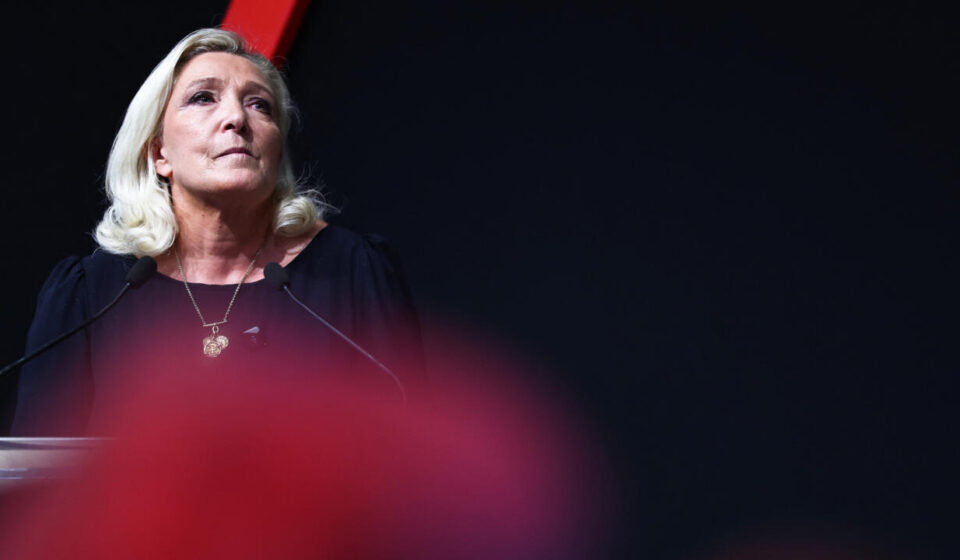
The next day, Jordan Bardella spoke of the “first signs of all-out war” against his party. Marine Le Pen then stated that Mediapart should be told to “put on its Kevlar suit,” adding that “there will obviously be a response” to the way the newspaper is behaving. Kevlar is used, among other things, in the manufacture of bulletproof vests. The choice of this imagery, directed at journalists in a political confrontation, explains why Mediapart viewed the remarks as threatening. However, this alone does not establish that physical violence was being threatened. ()
A Green Party lawmaker, Léa Balage El Mariky, stated that she would refer the matter to the prosecutor regarding remarks that, in her view, “resemble death threats.” This is a characterization put forward by an elected official, not a legally established finding. For his part, Jordan Bardella announced he would file a defamation suit against Mediapart. Challenging a publication in court is a matter of legal debate; suggesting that an editorial staff should protect itself behind Kevlar is an entirely different matter. ()
The Comparison with Macron: One Sentence, Two Distinct Incidents
On September 30, Emmanuel Macron responded from Madrid. When asked about the writings attributed to Jordan Bardella, he called them “extremely serious and unacceptable,” asked political leaders to clarify their positions, and condemned the use of violent language, which he believes could lead to an escalation. He also defended journalists’ right to work without being subjected to violent rhetoric. This was the head of state’s position, not a conclusion regarding the authenticity of the disputed writings. ()
Jordan Bardella responded by citing his participation in the Paris march against antisemitism on November 12, 2023—which Emmanuel Macron did not attend—as well as his own trip to Israel. The first comparison does indeed concern an absence from a demonstration. However, this does not imply that Macron did not visit Israel: the Élysée Palace has documented his visit on October 24, 2023, which took place before Bardella’s trip in March 2025. A march and an official visit are two different things; conflating the two obscures rather than clarifies the disagreement. ()
What this sequence says—and does not say—about the campaign
The RN’s response shifts part of the discussion: instead of addressing solely the origin and authenticity of the published messages, its leaders also call into question the work and intentions of the media outlet that revealed them. This is an interpretation of their statements, not proof of their internal strategy. It does not negate either Bardella’s right to challenge the investigation or the need to verify it based on the evidence and testimonies. ()
The democratic framework does not require taking a newspaper at its word. It protects both freedom of publication and the ability to challenge abuses of that freedom: Article 11 of the Declaration of the Rights of Man and of the Citizen guarantees the free communication of opinions while establishing liability in cases prescribed by law. This is precisely why a defamation complaint and a reference to bulletproof gear cannot be discussed on the same level. ()
What has been established: an investigation was published on September 28; Bardella rejects its conclusions; Marine Le Pen used the phrase “Kevlar suit” on September 29; and Macron politically condemned her on the 30th. What remains to be established: the authenticity of the disputed writings and the outcome of the announced legal proceedings. Nor does anything in this sequence allow us to gauge its impact on the 2027 election. Campaigns may produce striking phrases; they do not exempt us from verifying the facts they tend to obscure. ()
Main source: French Politics: News, Videos, Reports, and Analysis – France 24 (www.france24.com)
Original article: View the original source
Author: FRANCE 24
Additional sources
- Mediapart, investigation dated September 28, 2026: https://www.mediapart.fr/journal/politique/280926/les-banques-sont-toutes-detenues-par-des-juifs-jordan-bardella-face-ses-ecrits-antisemites
- Élysée Palace, press conference on September 30, 2026: https://www.elysee.fr/emmanuel-macron/2026/09/30/visite-detat-en-espagne
- Élysée, visit to Israel on October 24, 2023: https://www.elysee.fr/emmanuel-macron/2023/10/24/deplacement-du-president-de-la-republique-en-israel
- Légifrance, Article 11 of the Declaration of the Rights of Man and of the Citizen: https://www.legifrance.gouv.fr/loda/article_lc/LEGIARTI000006527437