

High school students are demanding teachers and better learning conditions; Jean-Luc Mélenchon and Sébastien Lecornu, meanwhile, are arguing over the political significance of the blockades. On September 28, 2026, their exchange pitted accusations of « repression » against those of « irresponsible bidding wars. » To understand this standoff, it’s necessary to separate the demands, the reported incidents, and the conclusions each side claims to draw from them.
A mobilization that is not limited to incidents
Since the week of September 21, high school students have been blockading schools, initially in the Île-de-France region, to protest overcrowded classes, difficult schedules, and teacher shortages. According to the regional education authorities cited by Le Nouvel Obs, blockades have also been reported in the southeast of the country. The Union of High School Students (Union syndicale lycéenne) is calling for the movement to expand on Tuesday, September 29: at the time of publication of the source article, this is a call to action , not a summary of a national mobilization that has already taken place.
The president of the Île-de-France region, Valérie Pécresse, reported that, for the previous week, 60 high schools experienced disruptions, ten schools were damaged, and eleven students or staff were injured by fireworks mortars. According to Le Nouvel Obs, the Paris police prefecture announced 31 arrests on Friday, September 25, in the greater Paris area. These figures describe different categories and time periods: a disrupted high school is not necessarily a damaged one , and an arrest alone does not indicate whether legal action will be taken.
Two political narratives, not two completed investigations.
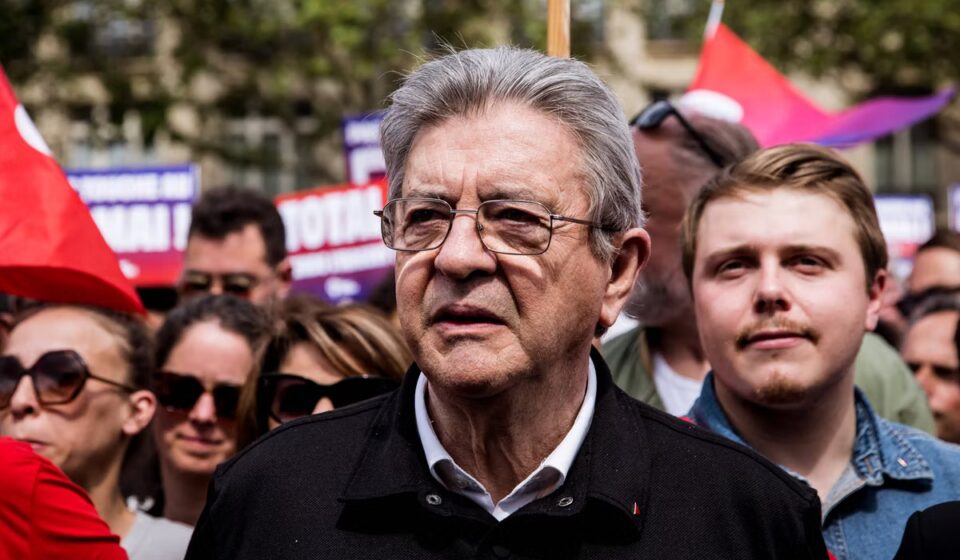
On September 28, Jean-Luc Mélenchon claimed that the government had « ordered repression » and called on elected officials and members of La France Insoumise to intervene wherever they could. Sébastien Lecornu responded by invoking the protection of individuals from violence and denouncing an « irresponsible escalation. » He specifically mentioned the case of a high school student injured with hydrochloric acid. The seriousness of such an account necessitates attributing it to its author; without further investigation, it does not allow for a reconstruction of the circumstances of each incident or a characterization of all the blockades. Similarly, the accusation of a government order for « repression » is not substantiated by the information published in the source article alone.
The two leaders are talking about the same days, but not the same subject. Mélenchon emphasizes the demands and police action; Lecornu focuses on violence and security. This choice of framing is politically significant. It resolves neither the reality of the reported academic difficulties, nor the proportionality of the police interventions: these questions would require data from each school and specific details about the operations in question.
National figures that shed light on, but do not resolve, the local conflict
Official data lends weight to the issue of class sizes: according to the Ministry’s Directorate for Evaluation, Forecasting and Performance, classes in general and technological high schools averaged 30.2 students in 2025 , compared to 27.7 in 2010. This national average confirms that class sizes warrant examination. It does not prove that every high school involved reaches this level, nor that a specific teacher is lacking in a given school.
Conversely, the 2026 budget presented by the Ministry includes, in particular, 300 additional positions for National Education psychologists, nurses, and social workers. This is a budgetary statement , not proof that the positions requested by high school students are already filled in their schools. The comparison between a national average and a promise of resources therefore does not replace the reality of classroom conditions, missed classes, and staffing levels in the schools concerned.
The presence of elected officials: a boundary that should not be invented
Le Nouvel Obs reports that several members of La France Insoumise (LFI) visited demonstrations, including Louis Boyard, Thomas Portes, and the mayor of Saint-Denis, Bally Bagayoko. Their presence fuels the controversy surrounding possible political exploitation. However, publicly supporting high school students does not prove that their movement was created by a party: a student quoted in the article asserts, on the contrary, that the demands at her school are not caused by « one party or another. »
An official document clarifies the legal limits of this discussion. In a memo published on September 17, 2026, the Ministry of National Education reiterates that a meeting or visit of a political nature to a school during school hours is prohibited; it distinguishes this from supervised educational activities and authorized meetings outside of school hours. The memo does not allow for the conclusion that an elected official present in front of a high school violated this rule. Confusing the school’s gate with the interior of its premises would be a convenient, but unsubstantiated, accusation.
Key takeaways
The electoral context is real: the first round of the presidential election is scheduled for April 18, 2027, and the second for May 2. This makes the dispute between a candidate and the Prime Minister politically understandable; it does not turn high school students into mere campaign extras. By September 28, 2026, the existence of school-related demands, reported incidents, and a public confrontation over their interpretation can be established. However, this confrontation cannot be interpreted as meaning that all blockades are violent, that all high school students support La France Insoumise (LFI), or that the accusations exchanged are proven. The most concrete test remains the one that political rhetoric overlooks: what is the situation, school by school, regarding the courses, student numbers, and staffing levels requested?
Main source: Le Nouvel Obs – Politics (www.nouvelobs.com)
Original article: See the original source
Author: News Service
Additional sources
- Ministry of National Education, National Education in Figures, 2026 edition .
- Ministry of National Education, Press release on the 2026 budget .
- Ministry of National Education, Note of September 14, 2026 on political interventions in schools .
- Élysée, Minutes of the Council of Ministers meeting of July 1, 2026 .