
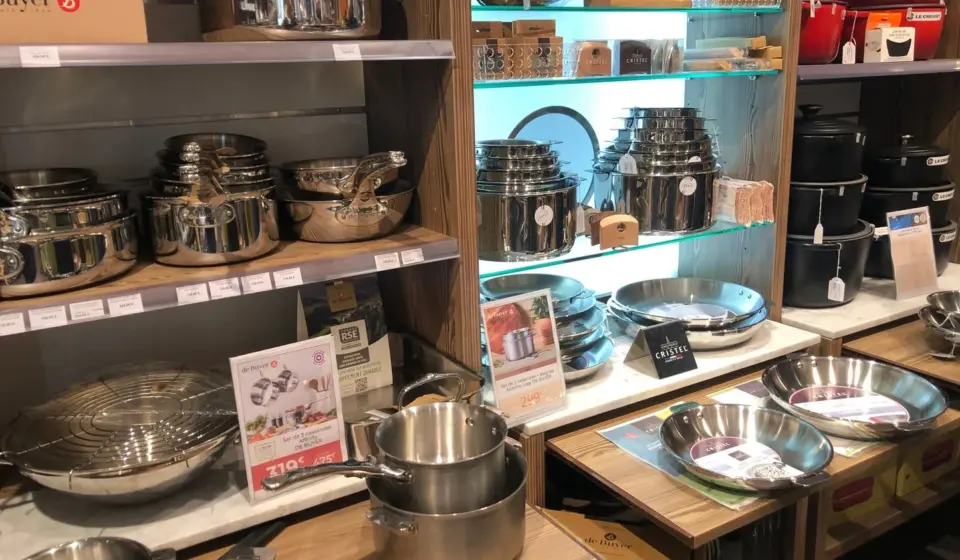
In Strasbourg, stainless steel is increasingly appealing to buyers concerned about PFAS in their kitchens.

In Strasbourg, retailers noted an increased demand for stainless steel pans and pots in an article published on February 27, 2025. This testimony, collected in several shops in the Bas-Rhin, reports on customer concerns regarding PFAS, but does not show the evolution of sales in the city as a whole or in the Grand Est region.
In Strasbourg, testimonials from sellers, not sales figures
Salespeople interviewed in downtown Strasbourg reported that customers were asking them more questions about the materials used in cookware. Some said they were seeing a renewed interest in stainless steel, chosen in particular for its perceived durability and the absence of a non-stick coating. However, the 20 Minutes article, published at 12:45 pm on February 27, 2025, provides neither sales statistics nor a numerical comparison between stores.
The change may also require new habits: food can stick more to stainless steel if cooking isn’t done properly, and some retailers advised using oil or butter. The purchase price is another factor to consider. These points describe feedback from retailers, not a comparative study on the health benefits or lifespan of different materials.
French law has not banned non-stick pans.
The regulatory context requires clarification. The French law on PFAS was enacted on February 27, 2025, and published in the Official Journal the following day. It did not include cookware among the prohibited products. As of September 29, 2026, the ban, which came into effect on January 1, 2026, applies specifically to certain cosmetics, clothing, footwear, and ski waxes containing PFAS, but not to non-stick pans or pots. ( ecologie.gouv.fr )
This regulation alone does not justify replacing a utensil that is still in good condition. For items intended for contact with food, the DGCCRF (French Directorate General for Competition Policy, Consumer Affairs and Fraud Control) recommends adhering to the manufacturer’s instructions for use. Compliance depends on specific usage conditions, including temperature and contact time. ( economie.gouv.fr )
What remains to be established
Testimonials from Strasbourg published in February 2025 indicate consumer concern, but do not specify whether this trend has continued. They also do not allow for a classification of stainless steel, cast iron, steel, or non-stick coatings based on their safety under all conditions of use. For residents of the Bas-Rhin region, the choice therefore remains both practical and personal: price, maintenance, cooking habits, and manufacturer’s instructions must all be considered.
Source: 20Minutes – Actu Strasbourg
Original article: See the original source