
Faced with European challenges, the French Economic, Social and Environmental Council (CESE) wants to bring civil society organizations closer together.

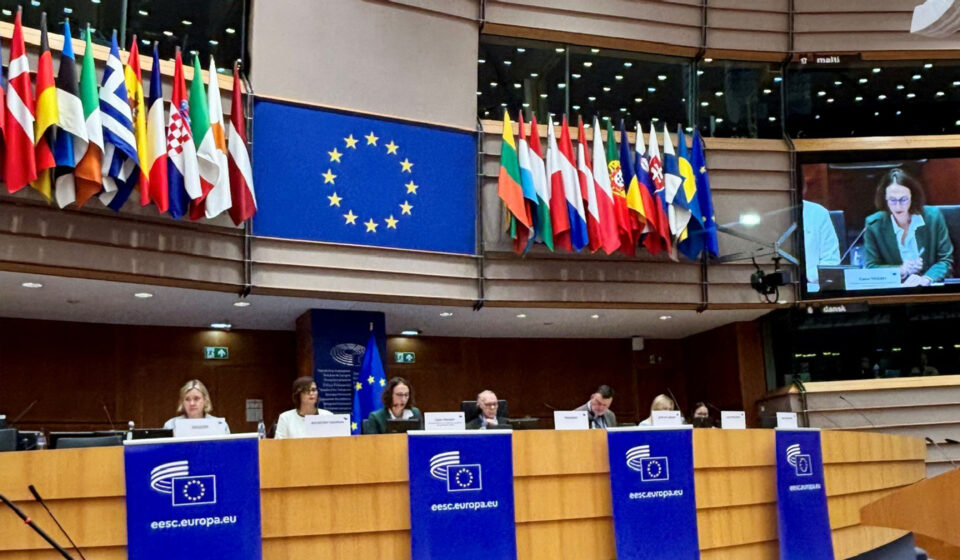
On September 24, 2026, in Brussels, Claire Thoury addressed the plenary session of the European Economic and Social Committee, advocating for strengthened cooperation between French and European bodies representing organized civil society. The topics discussed—poverty, employment, artificial intelligence, climate, water, and democracy—outline a joint work program, but do not yet constitute decisions or adopted meas. ( lecese.fr )
European issues rooted in everyday life
The meeting highlights issues frequently discussed at the EU level and their concrete consequences in member states: job quality, the effects of climate change, the uses of artificial intelligence, and the fight against poverty. The French Economic, Social and Environmental Council (CESE) indicates that these themes could inform joint work with its European counterpart, particularly on climate adaptation, the EU’s multiannual budget, water governance, and the protection of democracy. These are avenues for cooperation that have been announced, not results already achieved.
The two institutions formalized their partnership in 2017, with the aim of strengthening dialogue and exchanges on common issues. Claire Thoury’s statement is therefore part of an existing relationship, which she proposes to further leverage in the face of European challenges. ( lecese.fr )
What is the purpose of organized civil society?
This expression refers to organizations and groups that bring social interests or experiences into the public debate: trade unions, employers’ organizations, associations, and representatives from various sectors of economic and civic life. At the European level, the European Economic and Social Committee (EESC) brings together representatives from these groups. Its role is advisory: it helps the EU institutions take economic, social, and civic realities into account in their work, but it does not vote on European laws. ( eur-lex.europa.eu )
These bodies thus provide a space for dialogue between institutions and stakeholders who understand the realities on the ground. Their usefulness, however, depends on how their opinions and exchanges are taken into account by policymakers. Cooperation between councils can also allow for the comparison of national experiences, although this alone does not guarantee a common policy or its implementation.
Democracy, a shared area of work
In her speech, Claire Thoury cited the European Shield for Democracy as an example of a joint initiative undertaken by several economic and social councils. The European Economic and Social Committee (EESC), in an opinion adopted in September 2025, advocated for more structured participation of civil society in the democratic life of the Union. This opinion expresses the Committee’s position and recommendations; it does not, in itself, create new obligations for Member States or European institutions. ( eesc.europa.eu )
The issue therefore goes beyond mere institutional representation. It also concerns the capacity of organizations to raise diverse concerns and the ability of decision-makers to respond to them. Dialogue can bring European debates closer to the experiences of residents, provided that the contributions lead to identifiable results.
What the announcement does not yet allow us to conclude
The EESC press release reports on an intervention and proposed priorities. It provides neither data on citizens’ opinions, nor details of the extent of the social difficulties raised, nor a precise timetable for joint work. The meeting thus demonstrates a willingness to cooperate, but not an assessment of its impact. What happens next will depend on the proposals actually developed, the institutions to which they are addressed, and the decisions made regarding them.
Source: EESC News
Original article: See the original source