

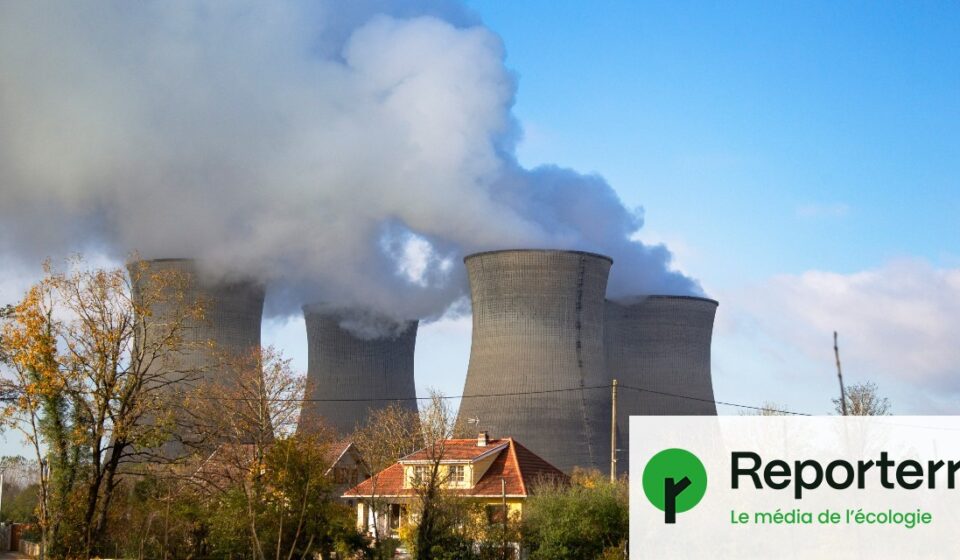
Radioactivity: radon accounts for 55% of the average annual dose received by the French population

The French metropolitan population receives an average of 7.1 millisieverts of ionizing radiation per year, according to the report published on September 28, 2026, by the Nuclear Safety and Radiation Protection Authority (ASNR). Radon accounts for the largest share of this radiation, followed by medical imaging. However, expo varies considerably depending on housing, altitude, dietary habits, and the use of medical examinations.
This estimate covers the period 2020-2024. It exceeds that of the previous assessment, which covered 2015-2019, by 2.6 mSv per year. The ASNR largely explains this increase by a reassessment of the dose attributed to radon, linked to the updating of its dose coefficient.
Radon, the primary source of expo
Colorless and odorless, this gas originates from the decay of radionuclides present in the soil. It can accumulate in buildings, particularly in poorly ventilated rooms. Areas with soils rich in uranium and granite—such as Brittany, the Massif Central, Corsica, and the Vosges Mountains—are particularly affected, as are certain Alpine and Pyrenean valleys.
According to ASNR estimates reported by Émilie Massemin, radon contributes to approximately 55% of the average dose, or 3.9 mSv per inhabitant per year. However, individual expos vary from 1.4 to 9.4 mSv per year. An old stone house with a poorly ventilated, earthen-floored cellar can promote the accumulation of the gas.
Radon is the second leading cause of lung cancer after smoking. Ventilating your home is recommended, especially in areas with high radon levels. If radon levels exceed the reference level of 300 becquerels per cubic meter (Bq/m³), the cause should be investigated. Above 1,000 Bq/m³, the French National Agency for Radioactive Waste Management (ASNR) recommends reducing expo and, if possible, carrying out remediation work.
Medical examinations, altitude and diet
Medical imaging is the second largest contributor to the average dose, at 1.6 mSv per capita per year. Conventional X-rays, particularly dental X-rays, are the most common examinations. CT scans contribute more to the total dose, followed, to a lesser extent, by nuclear medicine. Expo varies considerably: some people receive no dose from imaging, while others receive more.
The presence of a dose associated with an examination does not mean that a medical procedure should be foregone. For screening mammograms, offered every two years to women aged 50 to 74, the ASNR (French National Cancer Institute) emphasizes that the decision is based on a balance between benefits and risks.
Cosmic radiation from space is another source. The dose is estimated at 0.3 mSv per year at sea level and 0.8 mSv above 2,000 meters. Long-haul flights also increase expo. In the mountains, the dose mead in Tignes, Savoie, was 0.82 mSv in 2024.
Food and tobacco together account for 9% of the average dose, or 0.65 mSv per year. Certain shellfish and crustaceans, which can concentrate polonium-210, contribute to this expo. For the heaviest consumers of seafood—around 50 kg per year—the associated dose can reach 1.3 mSv per year.
A small contribution from nuclear facilities
According to the ASNR, the dose from basic nuclear installations is between 0.0001 and 0.01 mSv per year within a 10-kilometer radius. Around a cyclotron, a device used particularly in nuclear medicine and radiotherapy, it is estimated at 0.002 mSv per year within a one-kilometer radius.
The fallout from atmospheric nuclear tests and the Chernobyl accident corresponds to an estimated dose of approximately 0.005 mSv per year. The assessment attributes 90% of this estimate to the tests and 10% to Chernobyl. Certain areas in eastern France remain affected by the presence of cesium-137. People working outdoors on undisturbed soil may receive an additional dose; the consumption of game and wild mushrooms can also contribute to expo.
A risk that increases with the dose
According to ASNR epidemiologist Énora Cléro, the available scientific data do not allow for the establishment of a dose below which the absence of risk would be certain. Her analysis is that the long-term risk of cancer decreases with the dose, without a safety threshold being established for low expos.
The report also notes that a 2012 study published by Inserm and IRSN observed an excess of leukemia cases in children under 15 living within five kilometers of a nuclear power plant. This finding is that of the study cited in the report; it does not, on its own, establish a causal relationship.
To compile its assessment, the ASNR relies on radiological monitoring of the environment: more than 8,000 samples are taken annually from the air, water, soil, marine environment, and food, as well as more than 50,000 millimeters of radon. The authority also offers an online questionnaire to estimate individual expo.
Source: Reporterre, the ecology media outlet – Independent and freely accessible (reporterre.net)
Original article: See the original source
Author: Émilie Massemin