
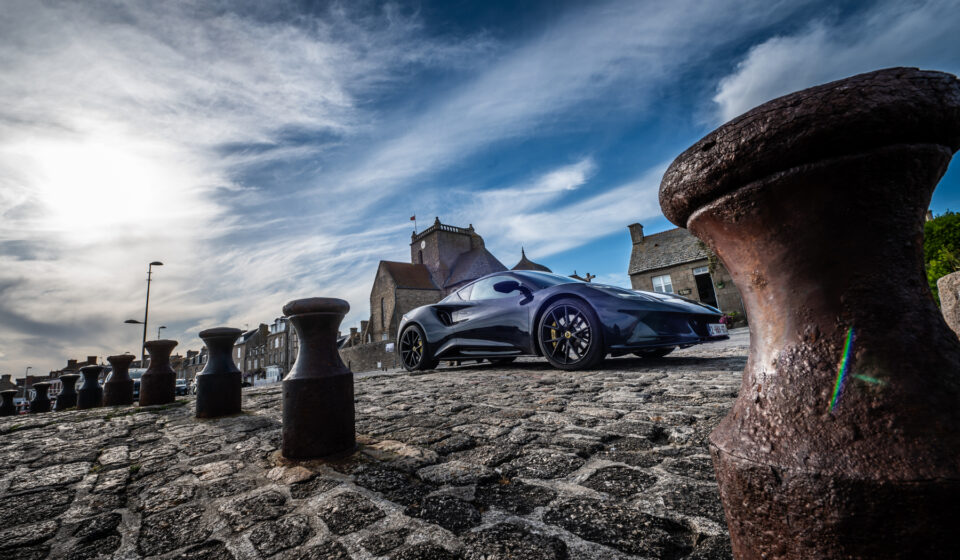

The Lotus Emira retains hydraulic power steering, prized for the feel it provides at the wheel. However, its system is electro-hydraulic: an electric pump supplies the necessary pres. This difference distinguishes the Emira from fully mechanical steering or electric power steering that acts directly on the rack.
Key takeaways
When the driver turns the steering wheel, a torsion bar deforms slightly and actuates a valve. This valve directs pressurized oil to a hydraulic cylinder that assists in moving the steering rack. The system reduces steering effort while still allowing some feedback from the road. Lotus describes the Emira’s steering as electro-hydraulic and emphasizes the feedback it provides. ( media.lotuscars.com )
How does the Emira’s management work?
The driver initiates the movement; the torsion bar registers the applied force. Its slight relative rotation actuates the rotary valve, which directs the fluid to one side or the other of the power steering piston. The piston then assists the steering. When the force ceases, the valve returns to its neutral position. This principle, described in the patents for power steering valves, allows the level of assistance to be adjusted according to the steering wheel input. ( patentimages.storage.googleapis.com )
Because the Emira’s pump is electrically driven, the car doesn’t simply use a hydraulic pump constantly driven by the internal combustion engine. The system therefore combines hydraulic power steering with an electric power supply to the pump: this is the meaning of the term « electrohydraulic » used by Lotus in its technical specifications. ( media.lotuscars.com )
This mechanical and hydraulic system contributes to the Sport Auto believes this architecture provides the driver with more feedback than many electric power steering systems. This is an editorial assessment, not a claim of universal superiority: electric systems, in particular, offer integration possibilities with driver assistance systems.
A choice with compromises
Hydraulic power steering adds components and requires energy to pressurize the fluid. Conversely, electric power steering can modulate its intervention without a hydraulic circuit. The Emira thus opts for a technical solution that, according to the manufacturer, prioritizes road contact, while using an electric pump rather than a drive directly linked to the engine. ( media.lotuscars.com )
The key point, therefore, is less the opposition between « hydraulic » and « electric » than the way the assistance is transmitted. On the Emira, oil acts on the rack and pinion; electricity powers the pump. It is this architecture that allows Lotus to retain the hydraulic principle while adapting it to a modern car.
Source: Sport Auto
Original article: See the original source