
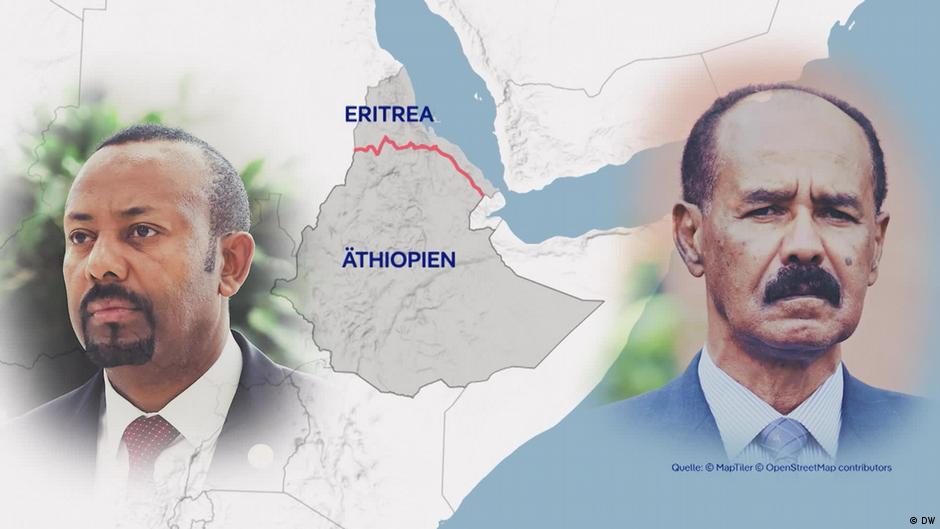

Eritrea’s location on the Red Sea gives it regional influence that exceeds its size. As relations with Ethiopia become strained once again, the port of Assab and the proximity of shipping lanes are fueling rivalries between the two countries. Addis Ababa also accuses Asmara of supporting the TPLF, an accusation publicly denied by an Eritrean official, according to a dispatch published on September 28.
A closed country, but one that is courted
Since its independence in 1993, Eritrea has not held any elections. The country is governed by a single party and President Isaias Afwerki. Repression and poverty have driven approximately 700,000 people to flee, representing nearly a fifth of the population.
The government also continues to levy a 2% tax on the diaspora’s income. According to testimonies, payment of this tax is often required to access consular services. The UN and the European Union have denounced the methods used to collect this tax for years, while several Western countries have taken meas against it.
This situation does not prevent Eritrea from attracting the interest of external actors. In early September, the United States lifted sanctions targeting the Eritrean defense forces and several entities. According to Abdurahman Sayed, director of the Horn of Africa Regional Integration Centre in London, regional powers, including Saudi Arabia and Egypt, have an interest in maintaining stable relations with Asmara.
The sea, at the heart of the dispute with Addis Ababa
Relations between Ethiopia and Eritrea improved after Abiy Ahmed came to power. This rapprochement contributed to the awarding of the Nobel Peace Prize to the Ethiopian Prime Minister in 2019. During the Tigray War, Eritrea was allied with the Ethiopian federal army. It subsequently felt excluded from the Pretoria Agreements concluded in 2022.
The disagreement centers primarily on access to the sea. Landlocked since Eritrea’s independence, Ethiopia considers the port of Assab essential for ending its isolation. This dispute gives a strategic dimension to relations between the two neighbors.
The Ethiopian army chief of staff accuses Asmara of providing military support to the Tigray People’s Liberation Front (TPLF) and its allies, who oppose the federal government. However, an Associated Press report published on September 28 indicates that Eritrean Information Minister Yemane Meskel disputed these accusations on the social network X.
The risk of a regional crisis
For Magnus Taylor of the International Crisis Group, the key issue is the potential spread of the conflict. He warns against a regionalization of the war, which could involve Eritrea and overlap with the conflict ravaging neighboring Sudan. This is a risk raised by the analyst, not a certainty.
Eritrea’s place in the regional balance of power is thus due to its strategic position, its ties with its neighbors, and the persistent tensions with Ethiopia. Accusations surrounding the TPLF are reigniting these rivalries, while the issue of Ethiopian access to the sea remains unresolved.
Source: DW-WORLD´s French Homepage (www.dw.com)
Original article: See the original source