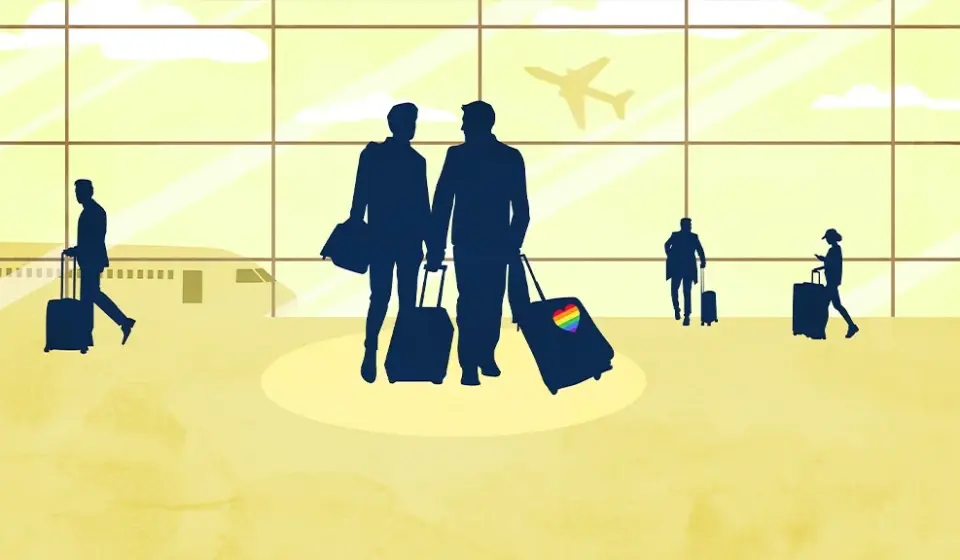

For LGBT+ travelers, choosing a destination isn’t just about budget or itinerary: local laws, attitudes, and the risk of being targeted also factor into their preparations. In countries considered unsafe, some adapt their behavior, limit their online presence, or even decide against traveling altogether. Several accounts published by BFMTV on June 29, 2024, illustrate this daily vigilance.
Check before booking
Emeric, a 29-year-old computer engineer from Paris, loves to travel, but says he researches each destination before going. He checks the laws and then tries to find out how the authorities and the local population might react to his homosexuality. This assessment influences how he plans to behave once he’s there.
Caution is also central to the advice of Danny Kronström, founder of the online guide Gay Voyageur and the podcast « Queer or Not? ». He notes that safety is a recurring theme in questions from LGBT+ travelers. His website, created in 2014, offers information on destinations, accommodations, and precautions to take.
Several resources can supplement this research: Equaldex’s LGBTQ+ rights map, recommendations from the French Ministry of Foreign Affairs, information from embassies, and the LGBT+ rights sections in some tourist guides. Booking platforms also list establishments described as LGBT-friendly.
According to ILGA data cited in the report, homosexuality was illegal in some 60 countries. In some African, Middle Eastern, and Southeast Asian states, LGBT+ people faced prison sentences or even the death penalty. The report also highlights that transgender identity is not recognized in a large part of the world.
Adapting one’s gestures and online presence
Preparation isn’t always enough to dispel anxiety. Marine L., a 35-year-old lesbian journalist, recounts a week-long trip with her partner near Agadir, Morocco. She says she didn’t feel comfortable in the streets, on the beach, and at the hotel. An employee inadvertently entered their room at a time that worried them. The report reminds readers that, according to ILGA, same-sex relations are punishable in Morocco by up to three years in prison and a fine, and that convictions have been recorded in recent years.
During a road trip in a campervan across Europe in February 2023, Léonie Nogueira and her wife Pauline also adapted their habits. When they stopped in places where they didn’t know how LGBT+ people were received, they made their travel account private. They explained that they were doing this as a precaution, especially since they were traveling with their three-year-old son.
American content creator Courtney Vondran, for her part, had removed rainbow flags from her social media accounts before a trip to Egypt, two years prior to the publication of the report. She also recounts being denied entry to Nicaragua, where she and her transgender fiancée, Liz, were to go on their honeymoon. The couple says they received no explanation and suspects that the lack of self-censorship on their social media may have played a role, though they have no proof. Both women systematically purchase trip cancellation insurance.
Choosing where to go, and where to spend
For Émeric, caution can extend to foregoing certain destinations. He says he no longer wants to stay in Poland, Hungary, or Russia, which he considers politically hostile to LGBT+ people. He presents this choice as a boycott, believing that money spent on travel contributes to the local economy.
When he does choose a destination where he doesn’t feel safe, he sometimes requests twin beds or two rooms to avoid arousing suspicion. He also prefers bars, restaurants, and accommodations where he believes he can be welcomed without having his every move monitored. For him, these places are spaces where he can feel at ease.
These experiences show that, for some LGBT+ travelers, planning a trip also involves deciding what they can show or say, and in which places they will feel safe. Several accounts describe this vigilance as burdensome, but one they sometimes consider necessary.
Source: Home Travel – News (www.bfmtv.com)
Original article: See the original source