

After nerve damage, even light touch can sometimes cause pain: this mechanical allodynia is common in neuropathic pain. In mice, researchers from Inserm and the University of Clermont Auvergne have identified a mechanism that could contribute to this phenomenon: the recruitment of neurons previously kept « dormant » in the spinal cord.
Presented in a press release from Inserm published on September 22, 2026, this research, published in Nature Communications, offers a new avenue for understanding how nerve damage disrupts sensory processing. It does not demonstrate that a treatment will result, but it does identify a population of neurons that warrants further investigation.
When touch becomes painful
Neuropathic pain occurs after an injury or disease of the somatosensory nervous system, which transmits sensations such as touch, pres, temperature, and pain. According to data reported by Inserm, it affects 7 to 10% of the world’s population. It can be long-lasting, severely debilitating, and resistant to most treatments.
Mechanical allodynia is a symptom of this: a normally painless stimulus, such as light pres or contact, triggers excessive or persistent pain. This phenomenon is associated with central sensitization, a hyperreactivity of neurons involved in processing sensory information.
The dorsal horn of the spinal cord acts as a primary central relay for this information. Under normal circumstances, the activity of the neurons located there is modulated by excitation and inhibition mechanisms. This regulation helps to distinguish between different types of stimuli.
« Sleepy » neurons recruited after the lesion
The Neuro-Dol laboratory team, led by Cédric Peirs, a researcher at Inserm, and Radhouane Dallel, a researcher at the University of Clermont Auvergne and director of the laboratory, studied these circuits in mice with neuropathy.
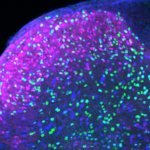
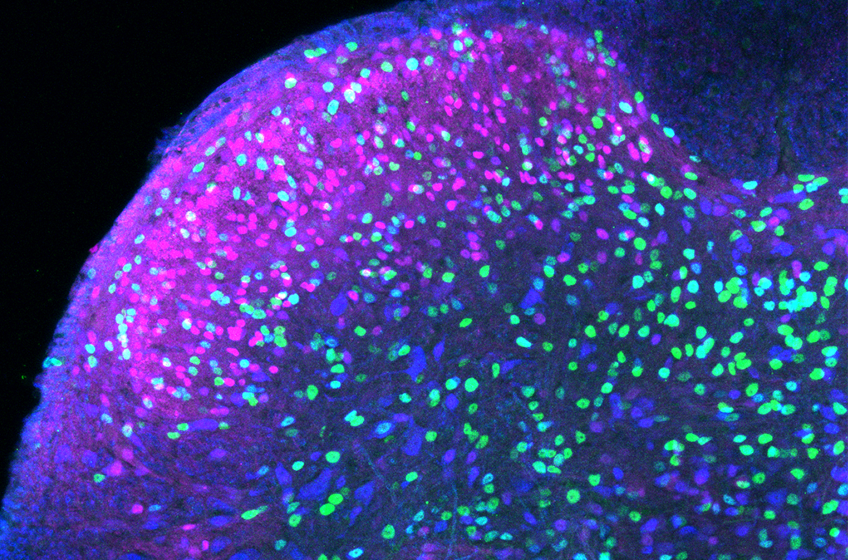
Researchers simultaneously monitored the activity of thousands of excitatory neurons in different layers of the dorsal horn in response to skin stimulation. Initial observations, conducted under normal conditions, show that the activity of the majority of neurons is inhibited. Some thus remain relatively inactive, or « dormant. »
After nerve damage, responses change: most of the observed neurons then react to several types of sensory information. The team notably found that the reorganization of circuits does not simply correspond to the transfer of tactile information to neurons specialized in pain. Rather, it is accompanied by the activation of a set of previously inactive neurons.
Many of these neurons are polymodal: they can respond to several sensory modalities, including tactile and painful stimuli. According to researchers, their recruitment could contribute to mechanical allodynia, by helping contact to be processed as pain.
A lead worth exploring further
These results call for a re-examination of a previously favored explanation, namely that tactile information inappropriately activates pain-related circuits. The study suggests instead that the loss of inhibitory control following nerve injury could render spinal cord neurons excitable and mobilize this multimodal network.
The identity of these neurons remains largely unknown. The authors believe further research is needed to better characterize them and determine their role in neuropathic pain. Their potential as targets for future treatments remains a possibility, not an established application.
Source: Inserm Press Room (presse.inserm.fr)
Original article: See the original source
Author: Inserm Press Room