
Bicentenary of photography: an anniversary that recalls its unique connection to reality

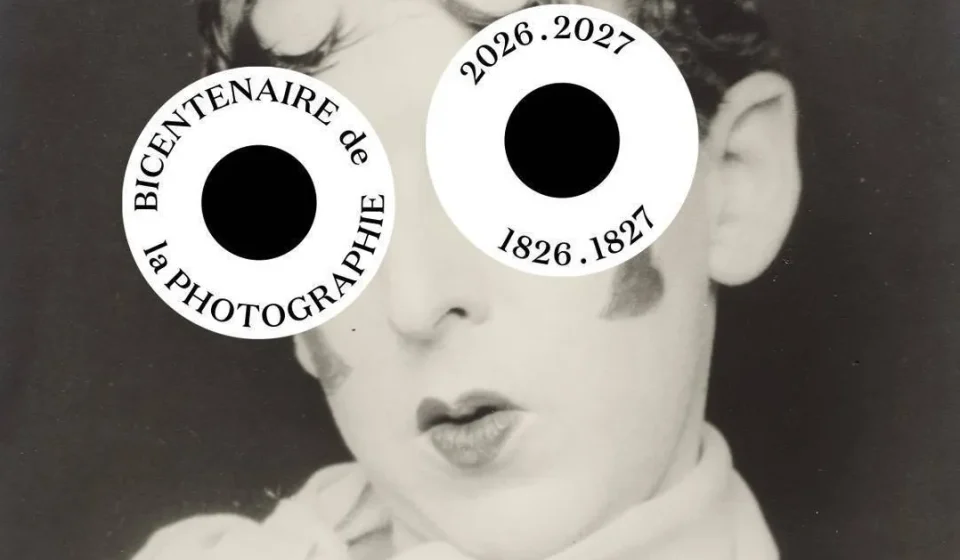
The bicentenary of photography is being celebrated nationally by the Ministry of Culture, with exhibitions and publications dedicated to the medium. For image historian André Gunthert, the anniversary is also an opportunity to reflect on what distinguishes photography: its historical link with reality, which has withstood the transformations of visual practices.
A nationwide celebration
Published on September 7, 2026, on the website L’image sociale, André Gunthert’s text revisits the launch of the bicentennial celebrations. The daily newspaper Libération devoted an eight-page supplement to the topic. Meanwhile, Fisheye magazine offers a 224-page special issue listing events organized throughout France until the end of 2027.
The program is to be rolled out in museums, archives, and galleries throughout the country. It is managed by the Ministry of Culture and its various departments. For Gunthert, this scale reflects the prominent role photography plays in everyday life as well as in the arts.
A disputed anniversary date
The bicentenary is based on the work of Nicéphore Niépce and on the heliograph, dated 1826-1827. This reference predates 1839, the year generally associated with the daguerreotype’s introduction. Gunthert points out that this historical choice is not without inaccuracies: Niépce’s heliograph was not adopted by others as a photographic process.
The historian also qualifies the narrative that Daguerre monopolized the recognition and pension associated with the invention. He points out that Daguerre requested that half of the pension go to Niépce’s heir. The commemoration thus invites us to examine not only the birth of photography, but also how its history is told.
Photography and its relationship to reality
Beyond the programming, Gunthert regrets the lack of a clearly perceptible guiding thread in the bicentennial presentations. He advocates an approach centered on the specificity of the medium: the photographic image relies on optical projection and, according to him, retains a particular relationship with what was in front of the lens.
This relationship does not prevent photography from serving creation or fiction. Cinema and advertising images can produce invented scenes while relying on photographic realism. According to the author, this effect of realism reinforces the credibility or interest of a narrative. Photography is therefore not limited to documentation: it has also contributed to establishing a way of telling stories through images.
Gunthert sees recent history as a demonstration of the persistence of these practices. The digitization of images at the end of the 20th century profoundly transformed practices, but did not eliminate the expectation of a connection to reality. He believes that those involved have sought to regulate retouching in order to preserve the truth value associated with photography.
For the historian, the bicentenary can thus open up a still unfinished project: to tell how photography has shaped a familiar visual culture, while maintaining a distinction between the image resulting from an optical recording and images resulting from other processes.
Source: L’image sociale (imagesociale.fr)
Original article: See the original source
Author: André Gunthert