

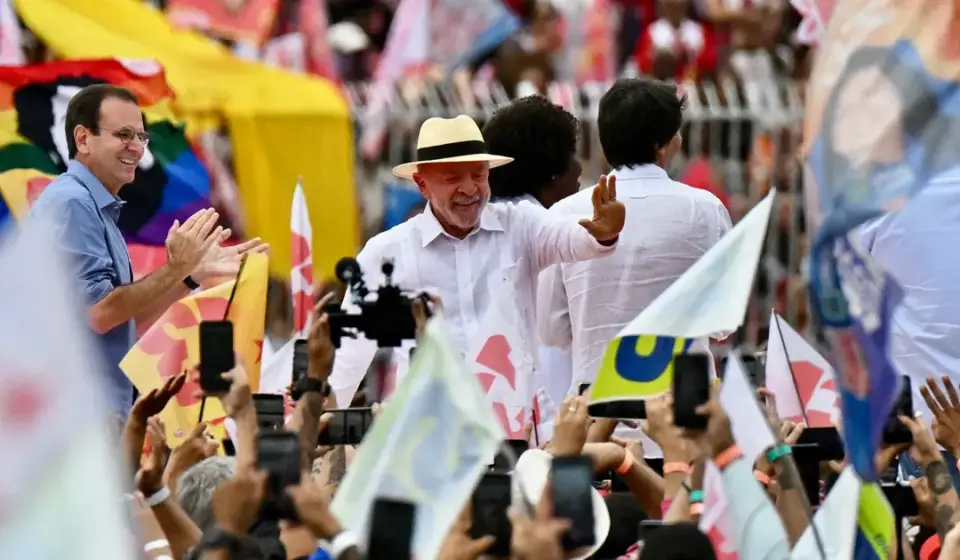
In Brazil, Lula’s record is not enough to dispel frustrations ahead of the 2026 presidential election.

Just days before the first round of the Brazilian presidential election, scheduled for October 4, 2026, Luiz Inácio Lula da Silva is defending a record marked by economic recovery and social reforms, but also by debt, high interest rates, and persistent frustrations. According to figures reported by Alternatives économiques on September 29, his government’s approval rating has fallen from 83% at the end of his second term to 32% today. Facing Senator Flávio Bolsonaro, the election is expected to be close, according to polls cited by the media outlet.
Economic indicators are improving
After a year of near stagnation in 2022, the Brazilian economy grew by 3.2% in 2023 and then by 2.3% in 2025, according to data reported by Alternatives économiques. Growth was driven by consumption, public investment, and exports of raw materials and agribusiness products.
Unemployment fell to 5.3% in July 2026, its lowest level since 2012, according to the article. The Brazilian statistical institute, IBGE, confirms a rate of 5.3% for the period from May to July 2026. Inflation, meanwhile, fell from 5.8% in 2022 to 4.3% in 2025.
The government sought to support household incomes. Meas cited included raising the minimum wage, expanding the Bolsa Família allowance, and a program allowing some insolvent households to forgive up to 80% of their debts. Lula also raised the income tax exemption threshold from 2,000 to 5,000 reais per month, a mea that, according to the article, affects 20 million families. The associated revenue loss was reportedly offset by a tax on incomes exceeding 50,000 reais per month.
Public investment constitutes the other pillar of economic policy. The Growth Acceleration Program (PAC) includes infrastructure, social housing, and industrial development projects. Its financing relies in particular on the public bank BNDES, which has committed 700 billion reais in subsidies, subsidized loans, and equity investments, according to figures published by Alternatives économiques.
The cost of credit weighs heavily on households and the state.
This balance sheet remains weakened by the level of interest rates. The article highlights that the Selic policy rate is hindering private investment and increasing loan repayment costs. The figure of 13.75% corresponds to the policy rate in effect after the decision of September 16, 2026, according to the Brazilian central bank.
The proportion of indebted households is projected to reach 82% in 2026, compared to 71% in 2022. According to data cited by the media outlet, 19.2% spend more than half of their income on interest payments, and 29% are in arrears. Interest rates are also putting a strain on public finances: debt is estimated to have increased from 73% to 83% of GDP in four years, while servicing it has become a major expense for government agencies.
On the social front, the government announced the eradication of hunger by 2025, a result attributed to the expansion of Bolsa Família and the Brasil Sem Fome program, which focuses on access to drinking water and support for family farming. A reduction in the weekly working hours, from 44 to 40 without a decrease in pay, was also adopted by the Chamber of Deputies. The bill was still awaiting review by the Senate at the time the source article was published.
An assessment that does not dispel the frustrations.
The recovery has not erased the income losses accumulated between 2012 and 2022. According to an analysis published by Alternatives économiques, the average annual income of the poorest half of the population remains lower than it was fifteen years ago, while that of the lower middle class has stagnated. The rise in precarious employment and the growth of platform work are also contributing to social difficulties.
The limitations of public action are also evident in higher education: 38% of graduates in 2025 held positions that did not match their qualifications, according to figures cited by the media outlet. The article also highlights the lack of structural reforms in several areas, including taxation, public higher education, and policing.
The elections on October 4 and 25—with a second round if necessary—will determine the candidates for president and state governors. For Lula, the challenge is to convince voters that economic and social progress can outweigh the cost of living, debt, and unmet expectations. His record offers some arguments, but is not enough, on its own, to dispel the discontent described in the analysis.
Source: Alternatives économiques (www.alternatives-economiques.fr)
Original article: See the original source
Author: Julien Dourgnon