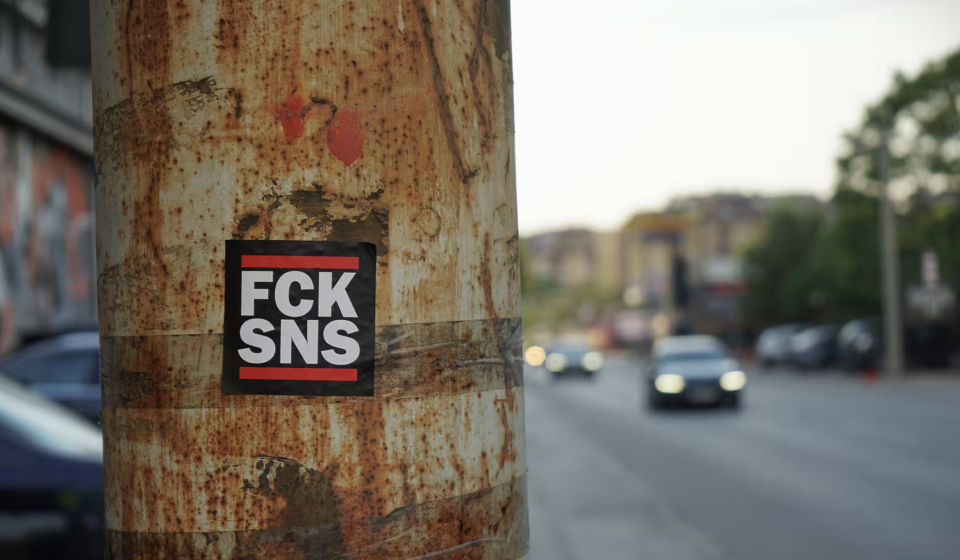
In Serbia, the government is weakening independent media through threats and financial leverage.

In Serbia, independent journalists face attacks, threats, and economic pres, while pro-government media outlets enjoy significant public support. Reporters Without Borders’ 2026 World Press Freedom Index ranks the country 104th globally. Journalists’ associations are also raising the alarm about violence targeting reporters and the growing difficulties faced by local newsrooms.
Violence on the ground
In March 2025, following an anti-government protest, President Aleksandar Vučić blamed the injuries sustained by an off-duty police officer on demonstrators. Videos subsequently circulated online showed the officer joining a group of uniformed police officers before collapsing. Independent media outlets examined the footage; further investigations concluded that a colleague had delivered the blow.
This episode illustrates the role independent media can play in verifying official statements. But journalists who investigate or cover protests are themselves at risk. The Independent Association of Journalists of Serbia (NUNS), which represents approximately 2,500 journalists, reports having recorded 380 cases of violence or threats last year, a record according to lawyer Marija Babić. She clarifies that only the most serious cases were recorded and that many incidents go unreported.
NUNS opened an emergency hotline three years ago for journalists who are threatened or seeking legal advice. According to Marija Babić and her colleague Rade Đurić, calls are now almost daily, sometimes dozens in a single day.
During the partial municipal elections of March 2026, journalists were attacked near a polling station in Bor, in the east of the country. Two of them were hospitalized; one suffered fractured cheekbones. The Reuters Institute notes that this election was marked by an unprecedented level of violence against journalists. In its 2026 survey, the institute puts the public’s trust in the news at 22% in Serbia, down five points from the previous year.
A hostile climate fueled by political rhetoric
The pres isn’t limited to physical attacks. The Slavko Ćuruvija Foundation monitors the statements of ten political figures and the coverage of three tabloid newspapers each month. Despite this limited scope, it records more than 100 monthly threats against journalists. Its director, Ivana Stefanović, believes that verbal attacks from political figures, amplified by media outlets close to the government, contribute to normalizing hostility toward critical reporters.
Several officials used derogatory language to refer to journalists; some also accused them of participating in a plot against the president and his family. Reporters Without Borders describes Aleksandar Vučić as an « enemy of press freedom, » particularly because of alleged pres he exerted on the public prosecutor’s office regarding critical media outlets.
The Foundation is named after Slavko Ćuruvija, a journalist murdered in 1999. The men convicted in the first instance for this murder were acquitted on appeal in 2023. To date, no final conviction has been handed down.
Public subsidies that weaken independent newsrooms
According to expert estimates cited in the report, approximately 90% of media outlets are under state control. Media outlets close to the government also benefit from public advertising revenue and subsidies awarded through calls for projects. In total, some 1.5 billion dinars, or about 13 million euros, are distributed annually nationwide to support content of public interest.
The Slavko Ćuruvija Foundation claims that these funds can benefit pro-government media outlets. In Belgrade the previous year, the majority of the aid was reportedly allocated to sensationalist newspapers regularly sanctioned for ethical breaches. A Balkan Insight investigation also described a tender in Vojvodina whose equipment requirements precisely matched the equipment owned by the sister of the Minister for European Integration, the only successful bidder with her news portal.
Independent local news outlets, however, have few resources to absorb legal costs. NUNS says it has observed procedures that could be used to exhaust or neutralize critical media, sometimes referred to as SLAPP suits.
The ownership of the media in question
Concerns also extend to the future of national media outlets. A recorded conversation between executives of Telekom Srbija and the United Group appeared to suggest a request to replace the head of United’s media division. The group confirmed the recording’s authenticity, while maintaining that the excerpts had been taken out of context. This executive was subsequently dismissed.
At the end of May 2026, United Group sold its media outlets critical of the government, including N1 and NovaS. The new owner, Alpac Capital, presented the transaction as a normal business decision. For Ivana Stefanović, this development increases the risk of critical voices losing their place in the media landscape.
Despite these press, independent journalists continue to work, sometimes holding down another job to finance their activities. At NUNS, Marija Babić particularly emphasizes the role of young reporters capable of documenting events that mainstream media outlets don’t always have access to.
Source: Voxeurop (voxeurop.eu)
Original article: See the original source
Author: Adrian Burtin