
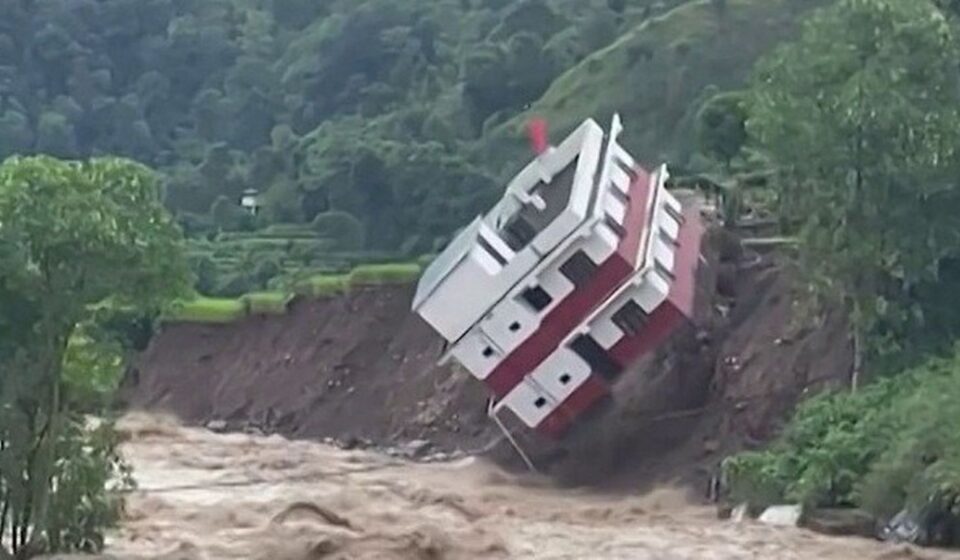

Heavy rains caused flooding and landslides in the Manang district of northern Nepal over the weekend of September 26-27, 2026. As of September 28, authorities reported casualties and missing persons in several parts of the country, while rescuers continued their search after a separate avalanche on Mount Himlung.
What happened
Near Chame, in Manang province, heavy rains caused flooding and landslides. Homes and infrastructure were affected, and roads were cut off in several mountainous areas. Local authorities attributed the damage to the heavy rainfall, according to reports from September 28.
The figures should be considered separately: the Nepalese disaster management agency recorded 21 deaths and five missing persons in various parts of the country between September 24 and 27. In addition, there was the avalanche on Mount Himlung in the Manang district: on September 28, four deaths and twelve missing persons were reported there. These figures, still provisional, therefore do not all correspond to the landslides near Chame.
The areas concerned
The Manang district in the central Himalayas is particularly vulnerable to flash floods and landslides: the deep valleys concentrate the runoff, while roads and houses may be located at the foot of steep slopes. The rains have also disrupted traffic in other districts of Nepal. On September 28, Radio Nepal reported roads affected by rainfall in several provinces.
The country was still recovering from the deadly floods of August 26. In its report covering the period from September 4 to 9, the UNFPA reported 1,367 confirmed deaths and 5,326 people still missing. This report is dated and should not be confused with the figures for the severe weather in September. The UNFPA situation report also specifies the period to which these figures refer.
Why slopes become more unstable
Heavy rainfall can saturate the soil, increase runoff, and further destabilize already unstable terrain. In high mountain areas, warming also affects glaciers and permafrost, the soil that remains frozen for extended periods and helps to stabilize certain slopes. Glaciologist Jean-Baptiste Bosson emphasizes that these changes can promote erosion and landslides.
The IPCC indicates that glacial retreat and permafrost thaw can reduce the stability of mountain slopes. This helps in understanding the evolution of long-term risks, but is not sufficient to attribute a particular event to climate change: rainfall, geology, and the local condition of the slopes also play a role. The IPCC report on high mountains reiterates these factors and the associated uncertainties.
Vigilance and precautions to be aware of
The report does not specify an official alert level applicable to all of Nepal. The reported figures are observations after the events, not a forecast. In the affected areas, it is advisable to follow the instructions of local authorities, avoid unstable riverbanks and slopes, and not to attempt to cross flooded or blocked roads. The search for survivors continued as of September 28.
Source: franceinfo – Floods and high water
Original article: See the original source